










Stripe vs PayPal: which one really wins for your online store
Spoiler: neither wins outright. The winner is whichever fits your specific business model.
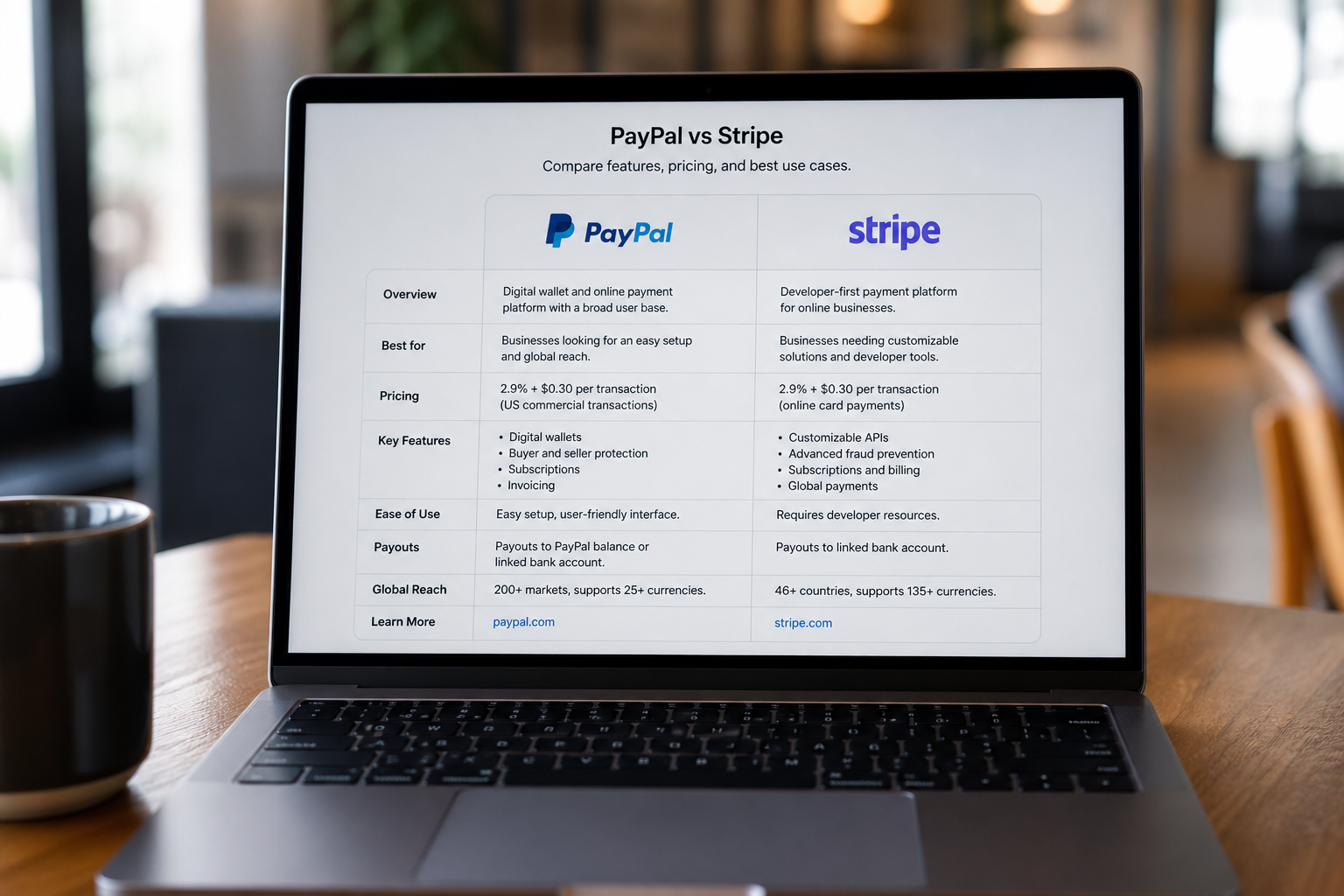
It's probably the most searched comparison in the entire payments industry, and the answer you'll find almost everywhere is "it depends". That's not a cop-out: it genuinely depends, and here we look at what it depends on, with concrete criteria for your specific case, not a generic feature list.
The customer's checkout experience
PayPal is instantly recognised by many customers, who often prefer it for the perceived sense of security, even at the cost of temporarily leaving your site.
Stripe allows a checkout fully embedded in your site, with no redirects, but requires the customer to trust your brand directly, without the "guarantee" effect of a recognised third-party name.
Technical flexibility and integration
Stripe offers far more flexible APIs, ideal if you have a technical team and want to customise every detail of the payment flow.
PayPal is easier to integrate for those without technical skills, with ready-made plugins for the most popular e-commerce platforms.
Fees: the wrong question to ask
Comparing the two advertised percentages isn't enough: you also need to compare settlement times and any fees for currency conversion or refunds and disputes.
At high volumes, both providers are willing to negotiate custom terms: never accept the standard rate without asking.
When neither is the right answer
If you also need a physical POS alongside your e-commerce, a provider that integrates both channels under the same account (something neither Stripe nor PayPal do natively) significantly simplifies bookkeeping.
If local-language support with a direct contact is a priority, it's worth evaluating local providers specialised in your market.
- PayPal offers instant customer recognition, Stripe offers a more integrated, customisable checkout.
- Stripe requires more technical skill, PayPal is easier to activate without development.
- Compare fees based on settlement times and hidden costs, not just the advertised percentage.
- Neither integrates a physical POS natively: if you need one, look for a provider that combines both channels.
- Choosing based only on which name is more famous, without looking at your specific business model.
- Comparing advertised fees without considering settlement times and hidden costs.
- Not considering integration with a future physical storefront.
Frequently asked questions
Yes, it's common practice: letting the customer choose at checkout often increases the conversion rate, since everyone pays with the method they prefer.
It depends on volume, sector, and the end customer's country: neither is systematically cheaper than the other in every scenario.
Yes, several local and European providers offer payment gateways with local support and, often, native integration with physical POS solutions.
An alternative built for your local market
Daevon combines online payments and a physical POS under the same account, with direct local support and negotiable fees on volume.