










E-invoicing and payments: closing the loop without chasing your money
You issue the invoice in thirty seconds. Then you spend three weeks checking whether anyone actually paid it. There's a way to avoid that.
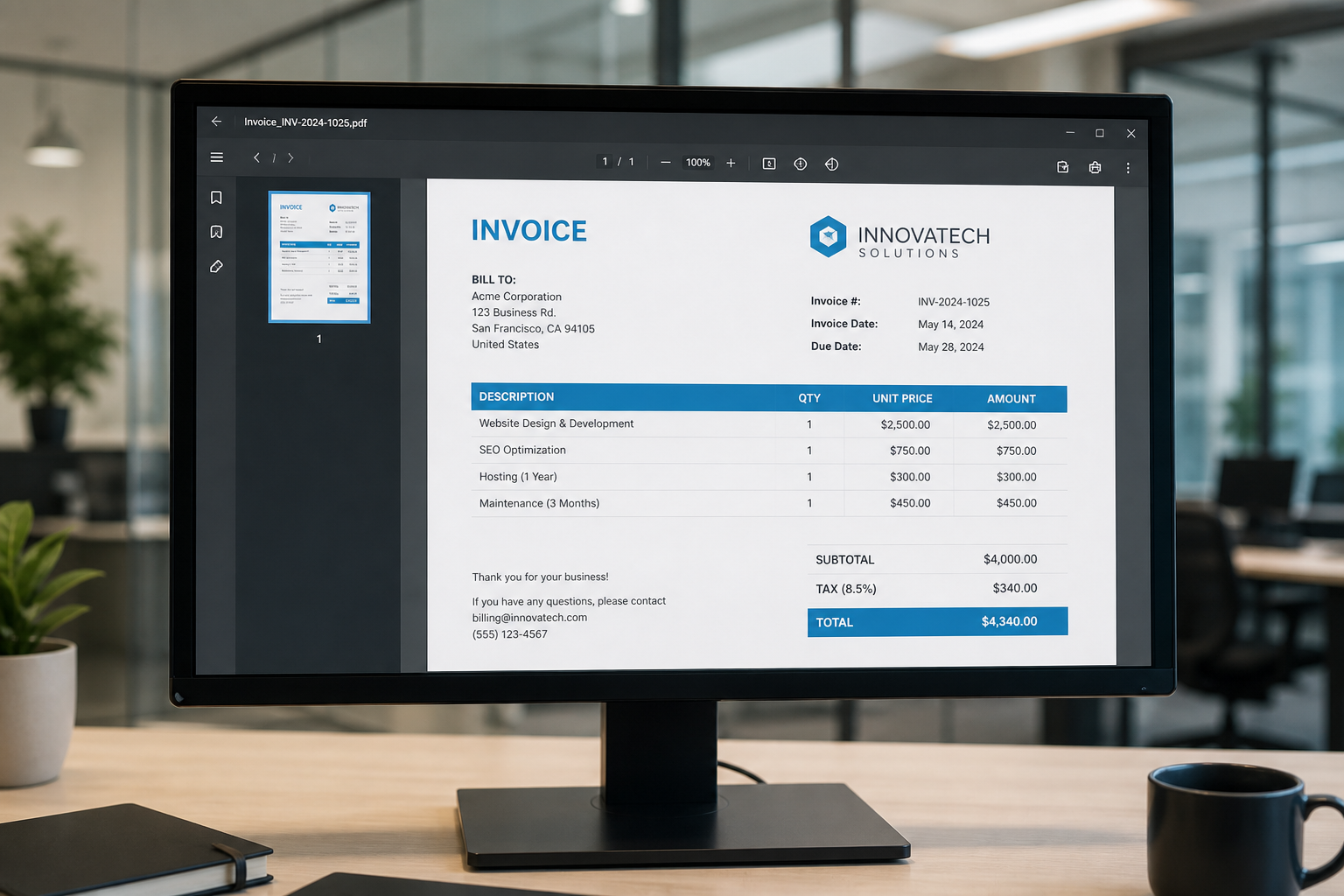
Electronic invoicing solved one problem (transmitting the tax document) but not the next one, often more annoying: knowing if and when that invoice was actually paid. Many small businesses still check their bank statement by hand, cross-referencing badly written payment references. Here's how to actually connect invoicing and payments.
The problem e-invoicing doesn't solve
The exchange system guarantees the invoice is correctly transmitted to the customer and the tax authority, but says nothing about when (or whether) the customer will actually pay.
For anyone managing dozens of invoices a month, the time spent manually verifying each payment is often greater than the time spent issuing the invoices themselves.
How to connect invoicing and payments in practice
A payment link generated directly from the invoice lets the customer pay with one click, and lets the system automatically mark the invoice as settled.
Virtual IBANs (a dedicated IBAN code for each customer or invoice) let you automatically identify which document an incoming transfer belongs to, without manually cross-referencing payment references.
Collecting B2B invoices via direct debit (SDD) automates collection for recurring customers, drastically reducing payment delays.
What changes for your bookkeeping
With a connected system, reconciling issued invoices against received payments becomes nearly automatic, reducing manual errors and the time spent on checks.
Real-time visibility into which invoices are still unpaid lets you act on late payments sooner, instead of discovering them weeks late at month's end.
- E-invoicing guarantees the document is transmitted, not that the payment is tracked.
- Payment links and virtual IBANs automate the matching between invoice and received payment.
- Direct debit reduces delays on recurring invoices to regular customers.
- A connected system gives real-time visibility into which invoices are still outstanding.
- Continuing to manually verify every payment by cross-referencing handwritten references.
- Not offering a direct payment method (link or card) tied to the invoice itself.
- Only discovering payment delays at month's end, instead of monitoring them in real time.
Frequently asked questions
Yes, many invoicing systems let you generate and embed a payment link in the document sent to the customer, or attach it separately via email.
Yes, SEPA direct debit (SDD) can be used for both consumer and business customers, with an authorisation mandate signed by the debtor.
It depends on volume, but for anyone managing dozens or hundreds of invoices a month, the savings are often measured in hours of admin work per week.
Connect invoices and payments automatically
With Daevon you generate payment links, virtual IBANs, and direct debits, all connected to your invoicing workflow.