











The card payment obligation in Italy: what you really need to know before the fine arrives
The law is more forgiving than you think, but the exceptions that actually matter are the ones nobody explains well.
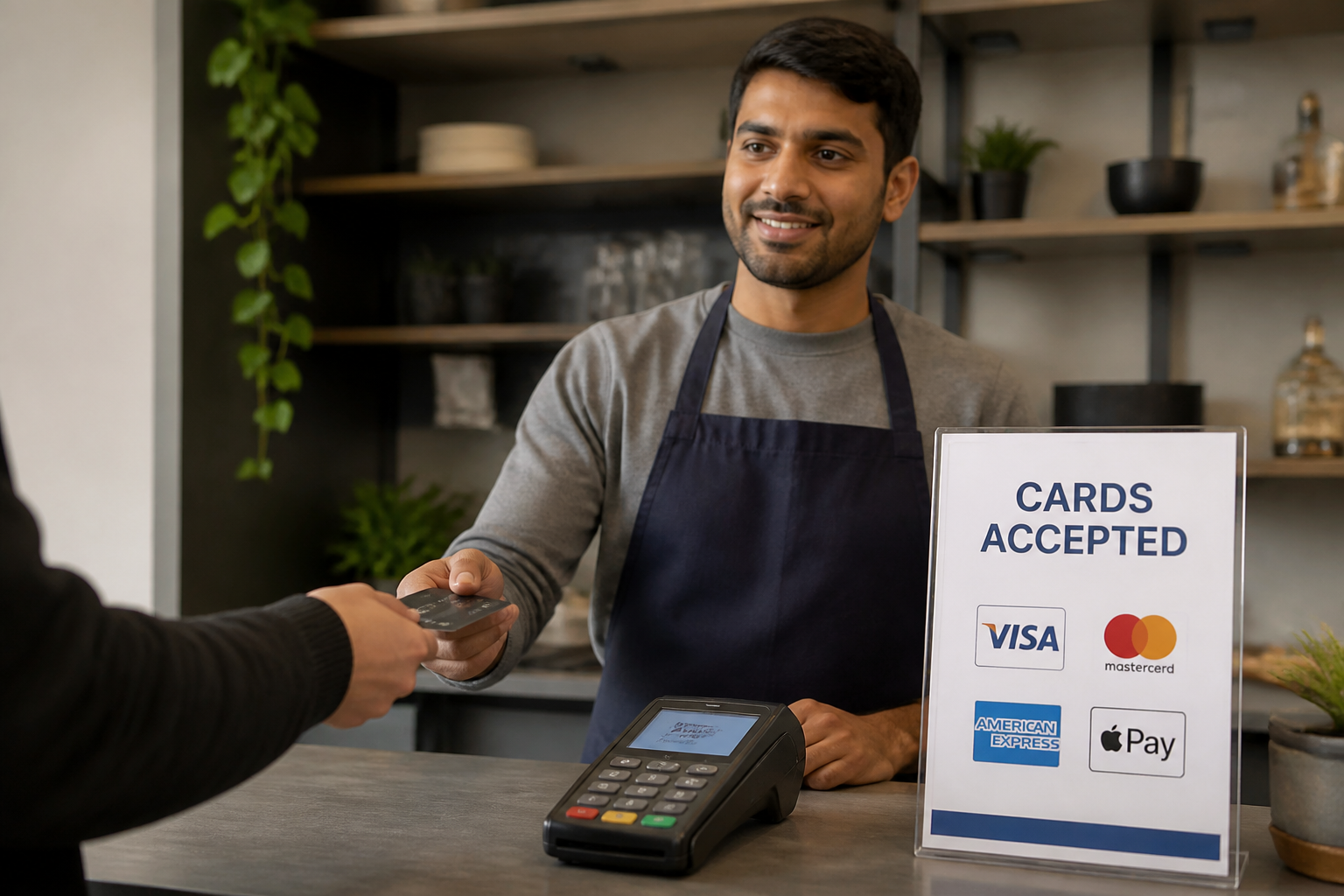
"They only check the big shops." That's the line we hear most often from merchants who keep postponing setting up a card terminal. Too bad the fines for refusing electronic payments apply to anyone with a business registration, from the local hairdresser to a 300-seat restaurant. In this article we look at what the rule actually says, what the real exceptions are (not the ones circulating on Facebook groups), and how to get compliant without the stress.
What the law on mandatory card acceptance really says
Since 2020, anyone selling goods or services, to consumers or businesses, must accept at least one electronic payment method: debit card, credit card, or contactless payment.
Business size doesn't matter. What matters is whether you issue receipts or invoices for a sale: if you do, the obligation applies to you.
You don't need the latest terminal. Any device that accepts cards is enough, including a mobile POS or an app that turns a smartphone into a payment terminal.
The exceptions almost nobody knows about
Fines only apply when a card payment is explicitly refused, not for an occasional technical fault on the terminal.
If your POS is temporarily out of service (internet down, flat battery) and you immediately offer the customer an alternative, you're not violating the rule — provided the issue is genuinely occasional, not structural.
Some seasonal or itinerant micro-businesses with very low turnover have different tolerance margins: if that's your case, it's worth confirming the specific situation with an accountant, since the general rule doesn't cover every scenario.
What happens if you don't accept electronic payments
The base fine is a fixed amount plus a percentage of the refused transaction's value: figures that look small until you multiply them by every inspection.
The real damage, though, is almost always bigger than the fine: a customer who can't pay by card often doesn't come back, and today they can tell everyone about it online in five minutes.
Trade associations report inspections concentrated in cash-heavy sectors: bars, hairdressers, taxis, markets. If you're in one of these, the perceived risk is higher — but the rule applies to everyone.
How to get compliant in one afternoon
Choose a provider that activates the service in days, not weeks: paperwork alone shouldn't be a reason to stay non-compliant for another three months.
Consider a mobile POS or a POS app if your business moves around (markets, fairs, home services): it costs less than a fixed terminal and you can activate it faster.
Always ask for the full fee structure, not just the advertised percentage: monthly fee, rental cost, cross-border transaction fees. A "from 0.99%" price is almost never the only cost.
- The card acceptance obligation applies to any registered business selling goods or services, not just large shops.
- An occasional fault isn't a violation; a terminal that's absent or permanently switched off is.
- The real cost of not having a POS is almost always higher than the fine: it's the customers you lose.
- Activating a POS today takes days, not months — it's no longer a valid excuse.
- Assuming the obligation only applies to high-turnover businesses: it doesn't.
- Choosing a POS based only on the percentage fee, ignoring the monthly charge and fixed costs.
- Delaying activation because "it's complicated": with the right provider, it no longer is.
Frequently asked questions
Yes. Your tax regime has no bearing on the obligation to accept electronic payments: what matters is that you sell goods or services and issue tax documents.
No, the fine only applies when a card payment is actively refused after the customer requests it. There's no obligation to offer it proactively, but you must accept it if asked.
It depends on the provider and your transaction volume: options range from low-fixed-cost mobile solutions with a per-transaction fee, to terminals with a fixed monthly fee. Always compare total annual cost, not the single commission rate.
Get your business compliant without wasting time
Discover Daevon's POS terminals and mobile solutions: fast activation, transparent fees, no surprises on your statement.